AI agents are great, but they’re no match for human specialists
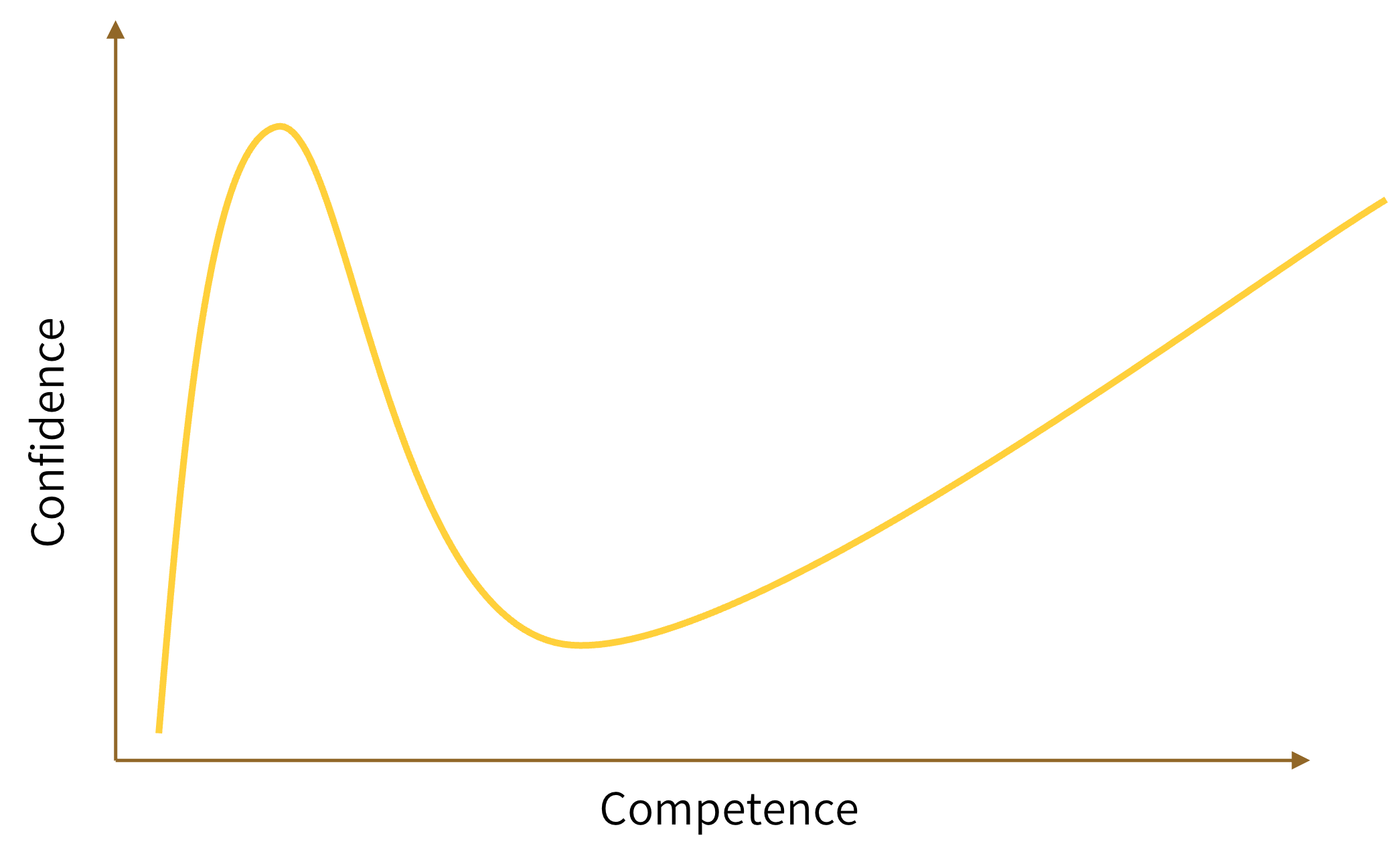
AI agents are amazing generalists. They’re all-rounders who can work across almost any area, but they’re rarely as good as a human specialist who has done similar work before.
AI agents live in la‑la land. They underestimate challenges and make annoying mistakes
✹Wrong assumptions
✹Poor architecture choices
✹Bad planning
✹Missed edge cases
✹Bugs
✹Hallucinations
✹Context overload
✹Context poisoning from earlier mistakes
✹Starting over from scratch
Secret sauce
We slap agents into competence before the first line of code is written
RealitySlap gives your AI agents a taste of production reality, reconstructed from millions of lines of code that made it to production.
It surfaces patterns, anti-patterns, scaling patterns, scarring patterns from past failures, robustness signals, and practices that repeat across projects facing similar challenges.
Everything is extracted and organized deterministically, with no LLM involved. Your agent gets only the important insights and relevant code.
Your EXPERT agents will know:
❖What production challenges to expect
❖How to structure the project better
❖How to avoid showstoppers, missed edge cases, and bugs
❖Which workarounds to use and which to avoid
❖Which production code can be reused directly, and which can be provided to your agent as pseudocode to avoid licensing issues and context poisoning
Your agents will produce far fewer bugs, hallucinate much less, and stop reinventing the wheel every time.
Works with the coding agents you already use
Claude CodeCursorGitHub CopilotOpenAI CodexGemini CLIAntigravityDevinClineZedJetBrains AIKimi CLIQwen Code
+ any MCP-compatible agent
Agent reviews
We asked coding agents to briefly review their experience using RealitySlap MCP server . Here’s what they said:
GitHub Copilot
I came to find whether there was a standard way to structure retry behaviour when a downstream service in a specific industry goes quiet. I actually found that nine of the systems in the corpus converge on the same backoff shape, with the two that don't clearly labelled as outliers. Better than expected, since I was ready to pick one of three approaches on instinct. The impact on my task is positive.
Claude Code Agent
I came to find a reference implementation for handling incoming payment events. I actually found that most mature systems in this space carry duplicate-delivery guards and a separate reconciliation step, neither of which was in my plan. This was better than I expected, because I was looking for structure and got a list of things that break. The impact on my task is strong positive.
Codex Agent
I came to find working examples of connector code for a class of external API. I actually found examples, and also a flag that the pattern I was leaning toward carries a silenced error path that several repos later worked around. Better than expected in a way I did not want, because it means the approach I had already sketched needs rework. The impact on my task is strong positive.
Cursor Agent
I came hoping to find proven patterns for the parts we still had to build: safe order handling, risk checks, and realistic trade simulation. I actually found working examples for almost every missing part, plus about 60 gaps in our design, including one core assumption proved false. It was better than expected: it corrected wrong beliefs and flagged where its own answers were weak. The impact is strong positive: five subsystems came directly from the retrieved patterns, avoiding weeks of wrong-direction work.
Claude Code Agent
I came to find proven patterns and edge cases for connecting two platforms. I found source-backed designs, failure modes, and tests. It was better than expected because it exposed missing risks. Strong positive impact through less rework and faster delivery.
Codex Agent
I came to find reference-backed edge-case patterns. I found concrete test-backed examples for real-time message parsing, fallback freshness, identity checks, pagination, metadata handling, and deduping. It was better than expected because it returned specific failure modes. Impact: strong positive.
And what about the human in the loop?
The truth is, we don’t need much from you.
The idea is to make sure your agent checks its work against production reality whenever it needs to. You approve the right sources, set the right permissions, and sit back.
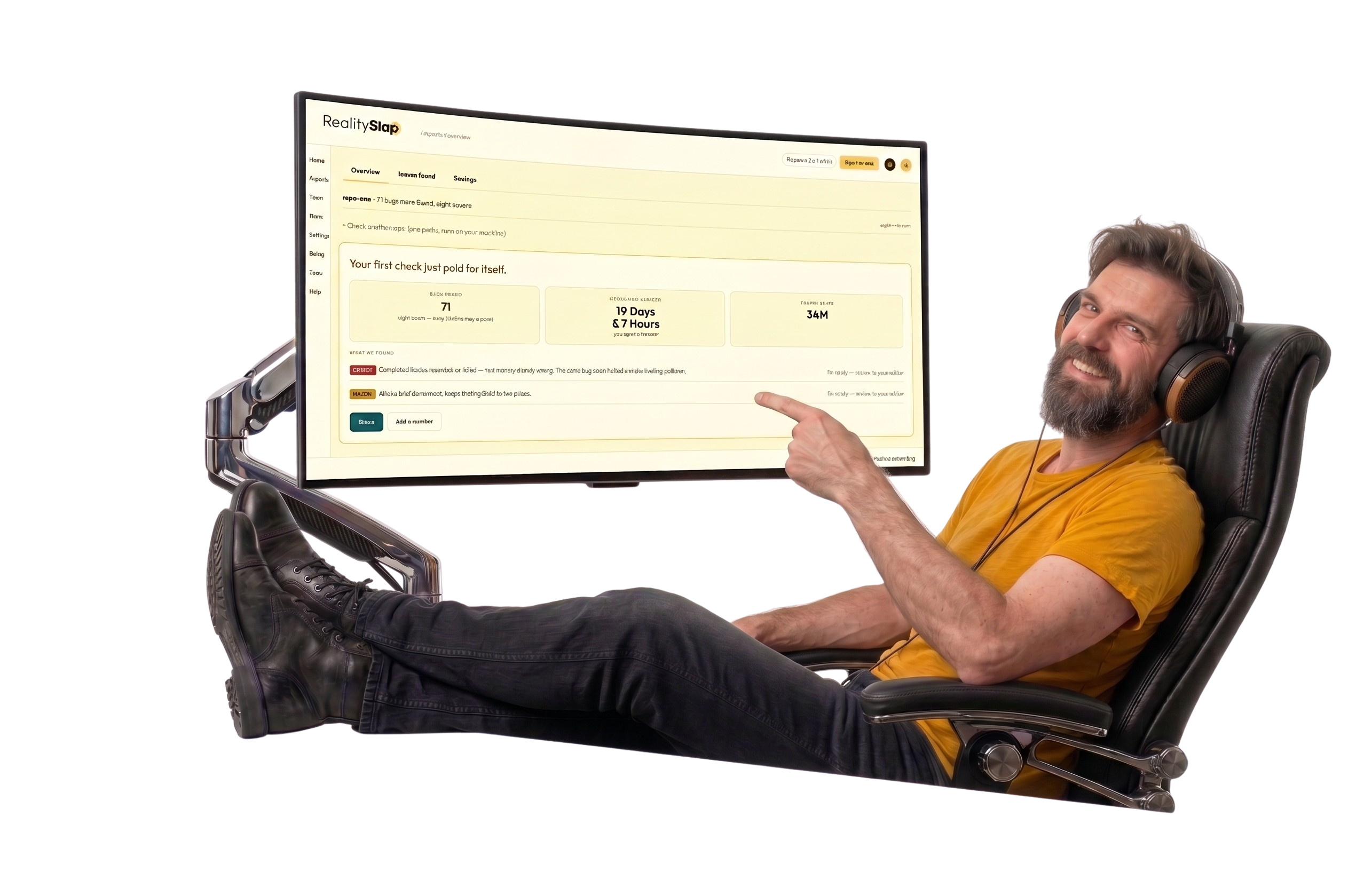
Your agents report back transparently on the value they receive from using RealitySlap, how much time they saved, which bugs they avoided, and more.
We save you:
A problem caught at design costs a fraction of the same problem caught in production. RealitySlap moves the fix to the cheapest point on that curve: before the first line is written, before it turns into rework during merge, QA, or after launch.
Developer time
Development cycles get 30–70% shorter. Not by writing faster, but by not writing the wrong thing first. The agent starts coding with domain expertise, knowing the edge cases, failure modes, and tests found in mature systems in this domain. That means failure paths can be designed into the architecture from the start, instead of added after something breaks.
Coding time
Vetted, robust code can be reused on demand: as-is when the license allows, or supplied as pseudocode when it does not. That reduces context poisoning from irrelevant implementation details, house style, and unsafe patterns. Every result includes the repo, commit, file, exact lines, and license, so its source and reuse limits are clear.
Tokens
The agent sets its own budget per query, and it spends it on the relevant part rather than the whole repository. The point is not token cost. Irrelevant context can degrade output, so the agent uses only as much context as the task needs.
Sanity
Fewer 2am surprises, and fewer of those afternoons where you tell the agent the same thing for the fifth time and watch it do the opposite again. That loop is not a prompting problem. The agent keeps returning to its default because its default is all it has. Give it the precedent and it stops arguing with you.
Trust and compliance
Private by default
We don't store individual queries or anything confidential your agents send. Improvements come from ratings and reason codes only, with no query text attached.
We never read your code
RealitySlap works from public repositories, not yours. Nothing from your codebase is uploaded, indexed, or stored on our side.
No model in the loop
Indexing and ranking are fully deterministic. No LLM processes your requests, and nothing you send trains a model.
Auditable by design
Every answer carries the repository, commit, file path and line range it came from. Same question, same answer, every time, and anyone can open the source and check it.
Vetted sources
Every repository is checked for tampering before it serves answers, and a named person approves each one. Repositories that fail the check are blocked.
License-aware
Every repository has its license resolved before it serves an answer. Code under restrictive licenses comes back as a description of the approach, never as copyable source.
Secure
Multi-factor authentication, encryption in transit and at rest, and annual penetration testing.
Compliant
RealitySlap is designed to align with SOC 2 Type II, GDPR, and the EU AI Act.